地球环境科学类专业“教育-科技-人才”协同育人改革路径探索

打开文本图片集
DOI:10.19980/j.CN23-1593/G4.2026.14.002
中图分类号:C961 文献标志码:A 文章编号:2096-000X(2026)14-0006-04
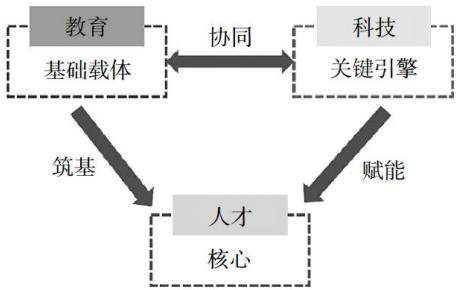
Abstract: The integrated development of education, science and technology, and talent in the new era serves as a key pathway for universities to support national ecological security and environmental governance strategies. Earth and environmental science, as an interdisciplinary field linking Earth system understanding, environmental problem-solving, and ecological conservation practice, is characterized by its strong theoretical nature, practical focus, and high dependence on technology. There is an urgent need to overcome traditional challenges such as the separation between education and scientific research, the mismatch between talent training and governance needs, and the difficulty in translating technological advances into teaching resources. Based on the attributes of this discipline, this paper clarifies the logic of collaborative talent cultivation through "education as the foundation, technology as the enabler, and talent as the guide." It examines practical constraints in curriculum design, teaching models, and collaboration mechanisms, and systematically proposes a teaching reform pathway covering five dimensions: repositioning educational objectives, restructuring course modules, transforming teaching with technology, improving evaluation systems, and strengthening support mechanisms. Drawing on practical cases from our university in areas such as global environmental change, environmental big data and remote sensing, and environmental monitoring and restoration, this study provides theoretical insights and practical models for cultivating innovative, interdisciplinary, and skilled talent aligned with national ecological and environmental strategic needs.
Keywords: Education–Science and Technology–Talents; earth and environmental sciences; collaborative talent cultivation; reform practice; educational reform
党的二十大报告将“教育、科技、人才”一体部署,确立为全面建设社会主义现代化国家的基础性、战略性支撑,系统构建了“教育筑基、科技赋能、人才引领”的三位一体发展格局。(剩余7848字)