投喂频率对日本对虾生长、免疫及抗氧化能力的影响

打开文本图片集
中图分类号:S963 文献标志码:A 文章编号:1004—6755(2026)04—0009-04
DOI:10.3969/j.issn.1004-6755.2026.04.003
Effects of feeding frequency on growth, immunity and antioxidant capacity of Penaeus japonicus
ZHEN Shuo1,²,REN Tongjun1,2.3 (1.College of Fisheries and Life Sciences,Dalian Ocean University,Dalian 116o23,China; 2.Laboratoryof AquaticAnimal Nutritionand Feed,DalianOcean University,Dalian116o23,China; 3.Dalian Ocean University,Key Laboratory of Applied Biology and proliferation with culture of Northern Fish,Liaoning province,Dalian 1l6o23,China)
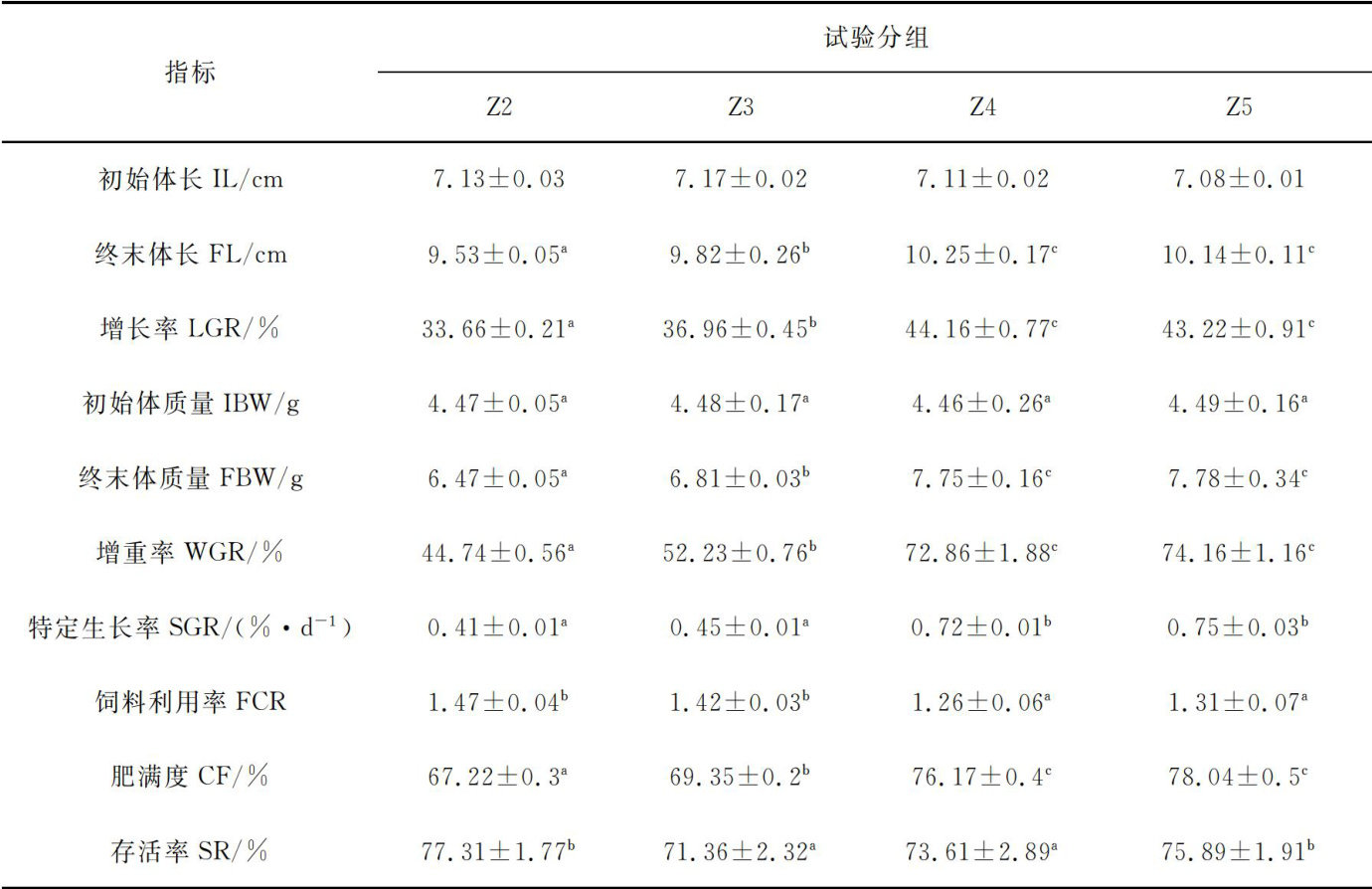
Abstract:In this study, Penaeus japonicus was selected as the culture species,and four groups with diferent feeding frequencies—Z2(2 times/day), Z3(3 times/day), Z4(4 times/day),and Z5 (5 times/day). A 50一day culture experiment was conducted under identical experimental conditions. The results showed that as feeding frequency increased,the activities of antioxidant enzyme and immune一related enzyme Penaeus japonicus initially increased and then decreased,peaking in the Z4 group. The Z4 and Z5 groups exhibited significantly higher activities of several antioxidant and immune enzymes compared to the Z2 and Z3 groups, but no significant difference s were observed in multiple growth indicators between the Z5 and Z4 groups. Additionally,the experimental results indicated a certain degree of immune stress. Therefore,under the conditions of this experiment,the optimal feeding frequency was 4 times/day.
Key words:Penaeus japonicus ; feeding frequency;growth performance
投喂频率直接决定了养殖动物的生长性能、生理健康、饲料利用效率以及养殖水体的水质调控[1]。(剩余4368字)