人工智能技术对产业链供应链韧性的影响

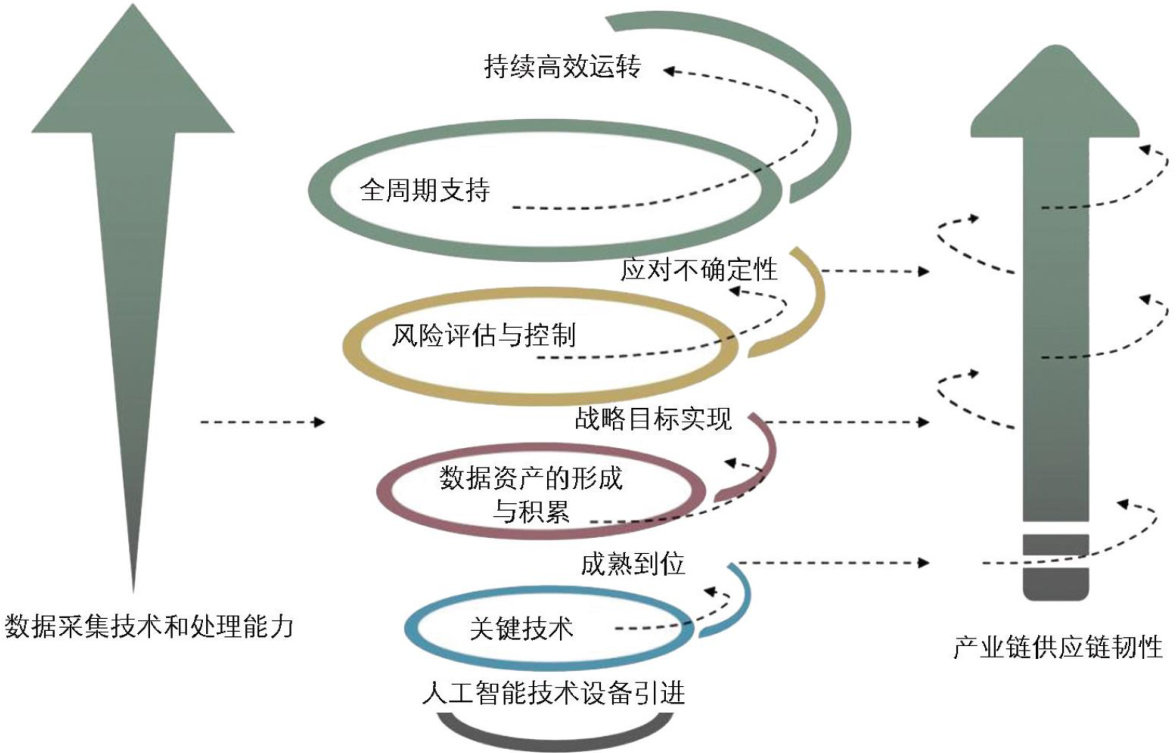
打开文本图片集
DOI:10.13718/j.cnki.xdzk.2026.02.018
Abstract:Based on the data of allA-share listed companies in China from 2O09 to 2O22,anonlinear multidimensional fixed-effect model was constructed to systematically explore the phased differentiated impacts of artificial intelligence technology on the resilience of enterprises'industrial chain and supply chain,and to clarify the nonlinear moderating effects of heterogeneous environmental regulations on the relationship between the two. The study found that: ① With the improvement of AI data collection and processing capabilities,the impact of AI technology on the resilience of industrial and supply chain gradually shifted from negative to positive effects,indicating diferentiated characteristics during the technical break-in and maturity stages. ② Mandatory-administrative environmental regulations weakened the “ U-shaped ” relationship between enterprises’AI and the resilience of their industrial chain and supply chain in the eastern and northeastern regions,but strengthened the relationship between the two in the central region; whereas market-incentive environmental regulations exhibited a reinforcing moderating effect in the western region; public-participation environmental regulations demonstrated a weakening moderating effect across eastern,central and western regions. ③ The low-carbon pilot policy significantly weakened the“U-shaped”relationship between AI and the resilience of the industrial and supply chain,and presented an arrangement pattern of “technology-intensive enterprises > capital and labor-intensive enterprises". Therefore,we should adapt to the circumstances and promote the construction and application of AI in a dynamic manner;adapt to the trends and precisely match the heterogeneous regulatory environments; adapt to local conditions and implement diferentiated development strategies for artificial intelligence; adapt to specific situations and systematically improve the risk assessment system and early warning mechanism,in order to reduce the risk of disconnection in the industrial chain and supply chain and enhance resilience.
Key words:artificial intelligence;heterogeneous environmental regulations; industrial and supply chain resilience;nonlinearity regulation
当前,全球产业链供应链正面临着成本上升、材料、劳动力和运输能力短缺的巨大挑战,严重的产业链供应链中断现象屡见不鲜,供应链弹性解决方案提供商Resilinc公布的数据显示,2024年上半年供应链中断比2023年同期增加了 30%[1] ,全球产业链供应链“堵链、阻链、断链”风险明显增大。(剩余15613字)