非药物干预膝关节置换病人术后疼痛的证据图谱分析

打开文本图片集
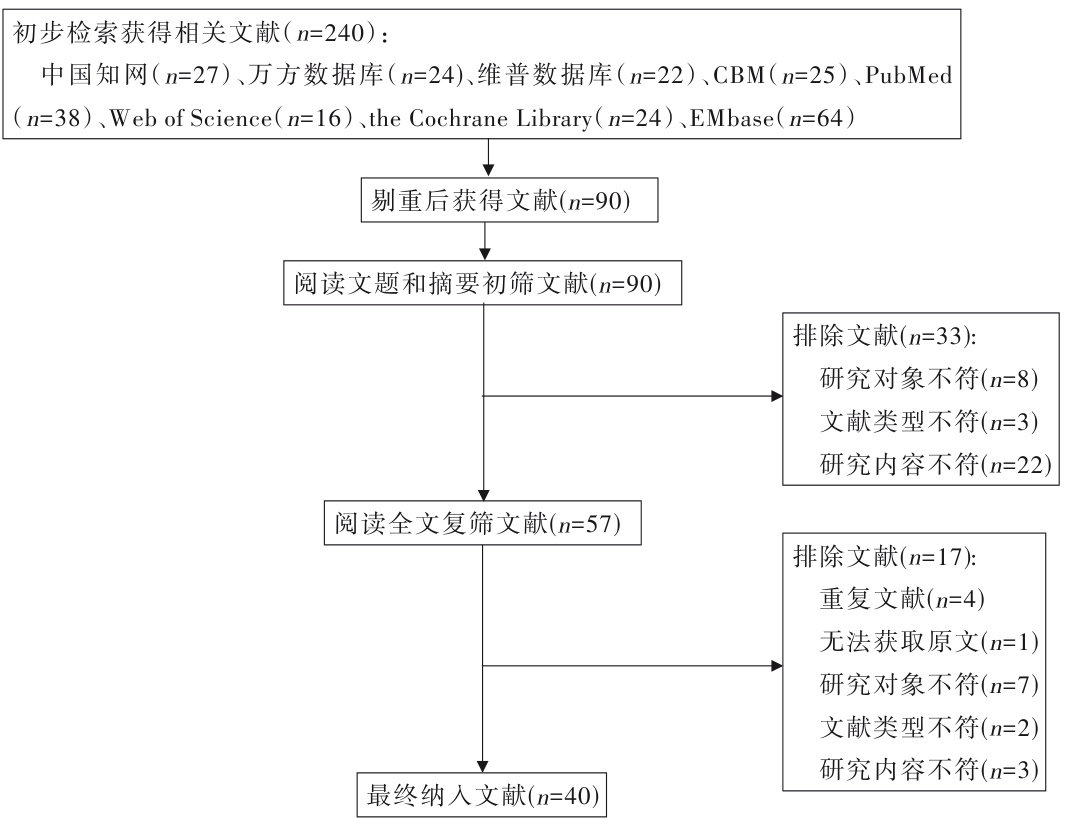
Abstract Objective: To systematically describe and evaluate studies on non ⁃ pharmacological interventions for postoperative pain in patients undergoing total knee arthroplasty using evidence mapping. Methods:CNKI,WanFang Database,VIP,CBM,PubMed,Web of Science,the Cochrane Library,and EMbase were searched by computer from the establishment of the database to July 25,2024,to obtain a systematic review/Meta ⁃ analysis of non ⁃ pharmacological interventions for postoperative pain in patients undergoing total knee arthroplasty. The systematic review evaluation tool AMSTAR 2 was used to evaluate the quality of the included studies, and the evidence map was used to comprehensively present the relevant information of the included studies. Results: A total of 40 articles were included. Among the non ⁃ drug interventions, traditional Chinese medicine therapy accounted for a large proportion, followed by cryotherapy. According to the results of the AMSTAR 2 quality assessment scale, the methodological problems included the failure to not write a plan in advance, to list the list of excluded literatures and the reasons for exclusion, and lack of funding information. The results of the evidence map showed that among the included 40 studies, 3 studies concluded that it was beneficial, 26 studies concluded that it might be beneficial, 9 studies concluded that there was no difference in effect, and 2 studies concluded that it was uncertain.
Conclusion: Current evidence shows that non ⁃ pharmacological interventions for postoperative pain in patients undergoing total knee arthroplasty are effective,but the quality of methodology needs to be improved. It is recommended to carry out higher quality and standardized research to provide evidence⁃based basis.
Keywords non⁃pharmacological intervention; knee arthroplasty; postoperative pain; map of evidence; evidence⁃based nursing摘要 目的:通过证据图谱方法系统描述和评价非药物干预膝关节置换病人术后疼痛的相关研究。(剩余13883字)