基于“人工智能 + 药物基因组学”的药物不良反应预测方法进展

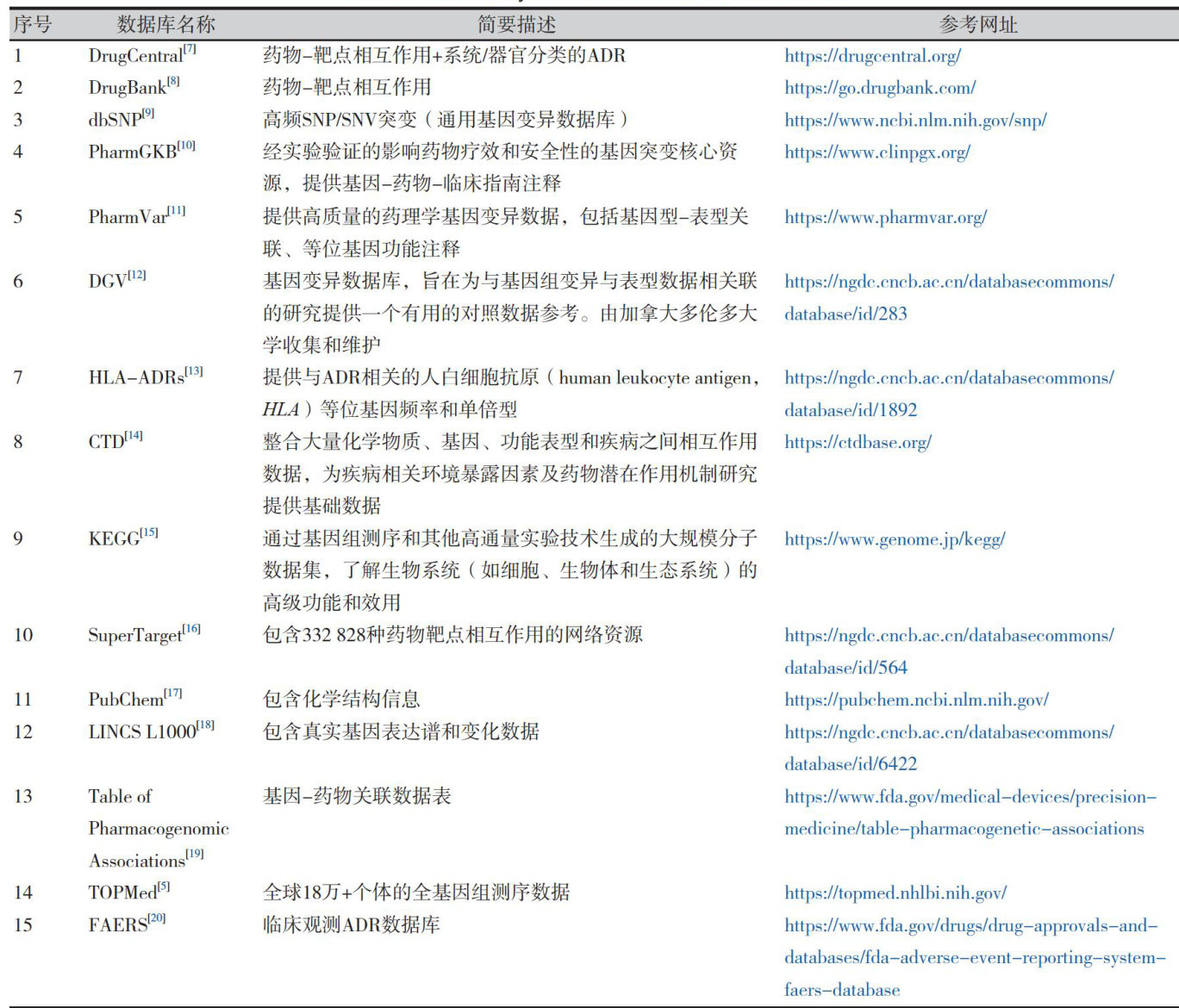
打开文本图片集
【中图分类号】R968 【文献标识码】A
【Abstract】Adverse drug reaction (ADR) represents a primary concern in global pharmacovigilance. Individual genetic variations, particularly pharmacogenomics (PGx) characteristics,are key factors contributing to the occurrence of ADR. In recent years,artificial intelligence (AI) technologies have enabled the integration of multi-omics data for accurate ADR prediction. This review summarizes AI methods for predicting ADR based on PGx. It begins by organizing commonly used multi-source heterogeneous datasets related to PGx and ADR, then highlights application examples of AI models-such as traditional machine learning (e.g.,support vector machine,random forests) and deep learning (e.g., convolutional neural networks,graph neural networks)-in this field. These models enable inteligent prediction of ADR by uncovering complex non-linear relationships among genetic variations,clinical medication features,and ADR.However,the field stillfaces challenges, including data heterogeneity, model interpretability,and obstacles in clinical translation. Finally,the review outlines future research directions,such as multi-modal data fusion and explainable AI,aiming to advance the development of personalized medication safety and precision medicine.
【KeyWords】Adverse drug reaction; Parmacogenomics; Artificial intelligence; Machine learning Multi-source heterogeneous; Neural network
药物不良反应(adversedrugreaction,ADR)是指合格药物在正常用法用量下出现的与用药目的无关的有害反应[。(剩余15939字)